Calcium carbonate’s roots run deep through human history. Quarry workers around the Mediterranean unearthed massive limestone deposits before anyone gave the mineral a name. Ancient Egyptians ground it to blend with pigments. Romans, practical and resourceful, mixed it with volcanic ash and lime to build whole cities, roads, and aqueducts that refuse to fall apart even after thousands of years. Chalk carvings from Europe’s caves and cathedrals tell more of the story; calcium carbonate provided a medium for both artistry and mathematics. Its use shifted in the 18th and 19th centuries, as chemists like Joseph Black and Antoine Lavoisier started sorting out its reactions, and producers across Europe baked, crushed, and refined it for industry. The stuff built the backbone for cement plants, paper mills, and, eventually, many food and drug products. What started as a chunk of rock or a stick of chalk now threads through every part of daily life.
An everyday person runs into calcium carbonate in grocery stores, classrooms, kitchens, and construction sites. It lands in the antacid aisle, bags of flour, and almost every school’s supply closet. Calcium carbonate commonly comes in the form of ground limestone or marble, crushed to powder for supplements and household cleaners. In construction, blocks and aggregate keep modern cities standing. Paper and paint producers lean on it for brightness and consistency, grinding or precipitating the mineral to different sizes. Food manufacturers mix it for fortified juices and cereals, relying on its “generally recognized as safe” status. Pharmaceutical companies produce high-purity calcium carbonate for tablet fillers and chewable drugs, while farmers use agricultural lime to balance soil acidity and deliver much-needed calcium to crops.
Calcium carbonate appears as a white, odorless powder that refuses to dissolve in water and resists major changes unless heated above 825°C, where it flips into calcium oxide and carbon dioxide. The mineral lives mainly in three forms: calcite, aragonite, and vaterite—unique crystal structures, but all share CaCO3 as their backbone. Calcite pops up the most, stable and unyielding. The powder feels cool and gritty between the fingers, with a Mohs hardness of 3. Its density clocks in at roughly 2.7 g/cm³, staying heavy yet manageable. Toss it in vinegar or any acid; it froths up, fizzing as CO2 gas escapes, proving lively in classrooms and kitchens alike.
Regulators in the U.S., Europe, and Asia hold calcium carbonate to strict standards. Food-grade material sticks to purity levels—no more than a small fraction of 1% for heavy metals like lead or arsenic, particle sizes marked in microns for consistent texture, and precise labeling for both consumers and bulk buyers. Pharmaceutical grades go higher, sometimes demanding greater than 99% CaCO3 content, zero contamination, and well-defined particle distributions. In agriculture, product labels reflect grind size, neutralizing value, and moisture content, letting farmers match the right lime to their soil’s needs. Paint and plastic manufacturers require certificates showing whiteness, chemical makeup, and absence of dangerous impurities; one bad batch can ruin a whole production run. Regulations ensure safety and let buyers trust what’s written on every sack, tablet bottle, or supplement jar.
Most commercial calcium carbonate starts in the earth as limestone or marble. Mines churn out chunks that get crushed, washed, and sorted into various grades, depending on where the end product heads. Some companies use a “precipitation” process: calcium hydroxide (slaked lime) dissolves in water, carbon dioxide gets bubbled in, and pure CaCO3 crystallizes out. This route delivers a finer, purer material ideal for pharmaceuticals and specialty applications. Grinding methods can make powder down to submicron sizes or leave it coarse for building materials. Every step affects purity, whiteness, and how the final product works in feeds, polishes, tablets, and cement. Companies invest in technology that wrings out as much calcium carbonate as possible, with waste from one process often feeding another plant as raw material.
Calcium carbonate reacts in clear, predictable ways that opened doors to modern chemistry. Drop it in acid, it liberates carbon dioxide and forms soluble calcium salts—an easy school experiment and the basis for many industrial reactions. Under strong heat, the mineral loses CO2, turning into quicklime, which centuries-old kilns and present-day kilns churn out non-stop for construction and steelmaking. Chemists learned to tweak the mineral further, using surface treatments and coatings to create functional fillers for plastics, rubbers, and paints. Coupling agents like stearic acid or silanes cover the particles, giving the mineral new roles as a water repellent or as a better mixing partner for polymers and resins. Research keeps turning up ways to modify calcium carbonate, making finer particles for medicine, stronger aggregates for cement, and even smart carriers for drug delivery.
Anyone reading ingredient labels or industrial catalogs stumbles across a cluster of names instead of just “calcium carbonate.” Chalk, limestone, marble dust, and whiting all refer to this same mineral, with manufacturers adding their own trade names for grades made to fit specialty uses. In pharmaceuticals, labels show terms like “precipitated calcium carbonate” or “PCC,” denoting the cleaner version. “Agricultural lime” points to coarser, untreated versions for field use. Some companies brand their products for whiteness or fineness, calling them Snowcal, Omyacarb, or Carbital, each ready to promise something special to a different market.
Regulators take the health and safety of calcium carbonate seriously. Most forms prove safe enough to eat, blend into vitamins, or use in toothpaste, so long as production follows good manufacturing practices. Many industries rely on guidance from the European Food Safety Authority, the U.S. Food and Drug Administration, and other agencies to prevent contamination with heavy metals, asbestos, or microbial growth. Workers moving big bags or hoppers of powder face possible dust exposure—the gritty cloud can irritate eyes and lungs, so companies install dust collectors, require masks, and teach safety drills. Safety data sheets set limits for airborne exposure and describe what to do after a spill. The rules end up protecting both people and the products headed into food, medicine, and fields.
Everyday life, industry, and health rest on calcium carbonate. Concrete makers add it to cement, turning powder into towers and highways that hold up whole cities. Schools rely on it as chalk that covers blackboards and math lessons, despite digital whiteboards pushing it aside. In food, it fortifies bread, flour, and orange juice; in pharmaceuticals, it forms the bulk of antacids and calcium supplements, fighting indigestion and keeping bones strong. Paint, plastics, and paper plants throw it into mix tanks for cost and brightness. Cleaners use it as a mild abrasive that scours pots, pans, and teeth alike. Farmers see it as the key mineral to sweeten sour soils and bump up crop yields. Dentists and cosmetic brands use specialty forms for toothpaste and powders, counting on smooth texture and safety. Nearly every corner of economy and health finds a use for calcium carbonate, tracing benefits down to the smallest detail.
University and industry labs keep chasing new angles on calcium carbonate. Material scientists want smaller, purer particles to boost polymer strength or create effective scaffolds for tissue regeneration. Green chemistry projects experiment with ways to pull carbon dioxide from the air and lock it inside engineered forms of CaCO3, hoping to slow climate change. Pharmaceutical researchers test modified nanoparticles as carriers for fragile drugs, letting them release at precise points in your body. Academics still ask why pearl oysters and corals make calcium carbonate so efficiently, hoping to copy nature for everything from stronger building materials to bone grafts. Newer work even looks at recycling waste CO2 by precipitating it as solid, permanent, and usable calcium carbonate—an idea with the promise to close the loop on emissions from cement and power plants.
Calcium carbonate, at the doses and levels used in food, medicine, and industry, shows a broad record of safety. Researchers tested it in rodent studies, cell cultures, and clinical trials; exceptionally high doses may stress the kidneys, spike calcium levels, or interfere with absorption of other nutrients. Where the mineral picks up contaminants like lead, arsenic, or crystalline silica during mining or processing, it turns toxic. That risk prompted new testing regimes, forcing suppliers to clean up the supply chain. Dust inhalation remains a workplace hazard, not a problem for end users, but one that calls for regular air sampling and personal protective equipment. No strong links to cancer arise from pure material; chronic inhalation of dusty environments—especially in mining and manufacturing—calls for ongoing monitoring. Tightly policed manufacturing and updated regulations keep known risks in check, showing that good habits in the factory matter as much as testing in the lab.
Next-generation uses for calcium carbonate promise to step beyond what made it famous. Carbon sequestration stands at the front, with startups exploring ways to capture atmospheric CO2 and convert it into stable, usable material—slowing climate change and cutting industrial footprints. Innovations in nanotechnology and medicine may spur new applications in drug delivery and bone repair, using the mineral as a biocompatible, built-in carrier. Paper, paint, and plastic manufacturers seek ways to cut energy use and emissions by perfecting "green" routes and recycling waste streams back into new products. Agriculture could see smarter lime blends, tuned to replenish micronutrients and fight soil decline. Researchers consider its role in water purification, pollution control, and even next-generation batteries. Much depends on tightening production standards, committing to sustainable sourcing, and embracing new science. Done right, calcium carbonate can stay relevant, adaptable, and safe throughout new challenges in health, the environment, and technology.
Walk into any city and look around—the skyline often relies on calcium carbonate. Limestone, a natural form, makes up much of our cement and concrete. It shapes buildings, roads, and bridges. Slaked lime also helps turn calcium carbonate into mortar. This material stands out for its affordability and its strength. It resists the elements too, which matters if you want structures that last longer than a single season.
Many people don’t realize that calcium carbonate hides in plain sight at home. Toothpaste gets its mild grit from this mineral. It helps scrub plaque without hurting your teeth. Chewing gum and baking powders use it as a bulking agent. Some of us might remember science classes, where we watched it fizz with vinegar. The same reaction happens in some antacid tablets, helping settle stomachs.
The soil under our feet can easily turn acidic after years of crop cycles or heavy rain. Farmers spread powdered limestone to bring the pH back to normal. Plants catch a break, and yields improve. Calcium carbonate even shows up in animal feed. Hens need extra calcium, and this white powder keeps their eggshells from cracking. It doesn't just benefit chickens—most livestock diets include it. Healthier animals mean more reliable food supplies.
The move from rough brown paper to smooth white sheets across homes and offices took a giant leap thanks to calcium carbonate. It replaces more expensive chemicals in paper plants. Brightness and smoothness both go up. This shift brings down costs for printers, publishers, and students alike. Even recycled papers depend on the mineral for better print quality.
Polluted streams and smokestacks put strain on the earth. Calcium carbonate helps buffer acidic waters left behind by mining or coal burning. It neutralizes acidic conditions, giving fish and plants a fighting chance. Scrubbers in power plants also use it to grab sulfur dioxide, stopping some harmful gases from escaping into the sky. This kind of cleanup makes the world a little safer for everyone.
Plastics and paints would cost more and work less without filler materials. This mineral helps stretch pigments and resins further, without making finished goods weak. The result: cheaper plastic containers, smoother paint for your walls, and more stretch in your budget. Tire manufacturers even add it to rubber for strength and durability.
People may talk about advanced tech all day, but good old calcium carbonate keeps on proving its worth. From the ground under our feet to the medicine cabinet, it touches almost every part of life. Sustainable mining and responsible sourcing need society’s attention, so resources hold out for years to come. Training newer generations of chemists and engineers to use this mineral wisely could have a ripple effect, making basic materials cleaner and cheaper for millions.
Calcium finds a big place in almost every discussion about bone health. Some folks reach for supplements like calcium carbonate every morning, especially as they get older or after a doctor checks their bone density. It seems like a harmless habit. Grocery store shelves hold calcium-rich antacids and big bottles of chewable tablets. Most doctors and dietitians agree—calcium carbonate fills an important role for many who can’t meet daily needs through food alone.
Growing up, I saw my grandmother take her calcium tablets with her morning tea. She believed they helped her avoid the aches that came with age. Medical experts have backed up this sort of thinking for decades. Calcium carbonate is one of the most common forms of supplemental calcium and for good reason—every tablet packs a solid calcium punch, and the price can’t be beat. According to the National Institutes of Health, adults need about 1,000 mg of calcium each day. A diet rich in dairy, leafy greens, and some nuts does the job for some people, but many fall short.
It’s not just about bones. The body relies on calcium for muscle contraction, nerve function, and keeping the heart on beat. But it doesn’t work alone. Vitamin D steps in to help us absorb calcium from food and supplements. If vitamin D runs low, all the calcium in the world won’t help much. I’ve seen friends surprised when their supplements didn’t make a dent in their health, only to find out a lack of sun or poor diet left their vitamin D stores empty.
As more people reach for supplements, another issue pops up—getting more calcium than the body can handle. The limit for healthy adults sits at about 2,000 to 2,500 mg a day. Go over that number too often, and problems can crop up. Kidney stones become more likely. Some studies link excess calcium with a higher risk of heart issues, especially in older adults. Taking tablets on an empty stomach can also lead to digestive trouble, bloating, or constipation. Over the years, I’ve watched family members deal with these side effects after self-dosing without talking to a doctor.
Just because a bottle says “calcium carbonate” doesn’t mean it works the same as every other on the market. The FDA keeps an eye on quality for over-the-counter supplements, but some brands slip through with fillers or inaccurate labels. A nutritionist once explained that cheap tablets might break down poorly or include heavy metals. Looking for trusted brands and checking for third-party certification labels can make a difference.
Doctors suggest sticking to the recommended daily dose and trying to split it up with meals to help absorption and avoid upset stomach. Checking with a healthcare provider helps avoid conflicts with other medicines or vitamins. In my own family, having a conversation with our doctor led us to cut back and focus more on food sources, using supplements only to fill the gaps.
Calcium carbonate earns its place in medicine cabinets for a reason, but daily use works best with a bit of knowledge and a good chat with a professional. Paying attention to quality, proper dosage, and personal health needs can keep the benefits strong and steer clear of the pitfalls.
Lots of people reach for calcium carbonate for extra bone support. Grocery shelves carry everything from chalky tablets to fruity chews. Each bottle lists a dose, but recommendations often confuse more than they help. I remember my great-aunt worrying about her bones and buying whatever looked strongest. Nobody explained that more is not always better. She learned her lesson after weeks of bloating and stomach aches—all from too much calcium carbonate.
This supplement delivers calcium, which bones and teeth need. It also plays a role in nerve signaling, muscle contraction, and blood clotting. Most doctors and authoritative bodies, including the U.S. National Institutes of Health (NIH), say that healthy adults generally need about 1,000 to 1,200 milligrams of calcium per day from all sources, including both food and supplements. Postmenopausal women and adults over 70 usually need closer to 1,200 milligrams daily.
Calcium carbonate is about 40% elemental calcium by weight. A tablet labeled as “500 mg of calcium carbonate” only delivers 200 mg of pure calcium. So those who lean on supplements should check the label and match their target daily dose from all sources, food included. For most adults taking calcium carbonate, 500 mg twice a day covers what they miss from food, so long as they don’t also load up on dairy and fortified juice. I’ve seen people in clinic show up with kidney stones—they thought that bottles labeled “high potency” protected their future, but didn’t account for cheese at every meal.
Kids and teens usually need between 1,000 and 1,300 mg calcium per day as they grow, so pediatricians sometimes suggest supplements, especially for picky eaters. Pregnant and breastfeeding women also fall into this higher range. Still, many reach their limits from food alone, unless they cut out dairy or leafy greens.
Taking more than 2,000 to 2,500 mg calcium daily from all sources poses risks. People complain about gas and constipation first, then sometimes run into bigger problems like kidney stones or interference with their body’s ability to absorb other minerals such as iron and zinc. Patients with heart or kidney issues need extra care. Having watched my own mother deal with chronic kidney disease, I learned how important it is to monitor all her supplements, especially calcium-based antacids, which add up quickly without realizing it.
Doctors and registered dietitians recommend splitting doses above 500 mg, since the body absorbs calcium better in smaller amounts. Nobody benefits from taking everything at once before bed. Folks on acid-reducing medications often run into trouble absorbing calcium carbonate, so some end up switching to calcium citrate, which doesn’t need as much stomach acid for absorption.
It helps to keep a food record for a couple of days before starting a supplement. Most don’t realize how much or how little calcium they get from diet alone. Leafy greens, tofu, certain fish, and dairy all count. Supplements fill gaps, not a gaping hole, and regular check-ins with a healthcare provider can keep problems away. Safe dosing starts with knowing what the body already gets, and only adding what’s really missing.
For years, I’ve heard people talk about calcium tablets, especially the ones made with calcium carbonate. Doctors hand them out for osteoporosis, and anyone dealing with heartburn probably knows them as Tums. It seems harmless, but once you start reading up, a few warnings pop up.
Lots of folks pop calcium carbonate for quick relief from stomach acid. It usually works. Here’s the thing—the body absorbs the calcium, and for some, too much becomes a problem. Too much of anything never ends well (think of overdosing on chocolate). Humans aren’t great at noticing how much mineral sneaks in over time. Constipation is one of the first signals. I remember my aunt complaining her regular antacid fix led to belly aches, but she didn’t piece it together for weeks. Bloating and gas can tag along too. Not the sort of thing people love to talk about, yet it happens a lot more than you’d think.
Taking too much of this stuff, especially along with a calcium-rich diet or vitamin D, can tip a person into dangerous territory. Elevated calcium in the bloodstream, a condition called hypercalcemia, starts chipping away at well-being. Early signs might be fatigue, kidney stones, increased thirst, or, again, constipation. Beyond discomfort, kidneys haul the biggest burden. People with kidney trouble already, or those with thyroid issues, are at higher risk. Details matter here—a 2021 study showed that adults taking high-dose supplements faced a greater chance of kidney stones. So much for the cliché about “just a supplement.”
Calcium carbonate isn’t shy. It clashes with plenty of prescription drugs—thyroid medicine, antibiotics, and certain blood pressure pills. It gets in the way of how the body absorbs these drugs, making them less effective. Mixing meds and supplements without a doctor’s input can lead to missed benefits or surprises down the line.
Most adults benefit from about 1000 milligrams of calcium daily, through food and, sometimes, a supplement. The National Institutes of Health recommends not to cross 2000-2500 milligrams each day from all sources. It’s easy to miss that mark just by doubling up on fortified foods and a vitamin.
No one wants to land an ER visit over a supplement meant to help. The solution isn’t to swear off calcium, but to pay attention to labels, respect dosing, and bring up any supplements with a healthcare provider. Blood work can check levels, catch overuse and solve small issues before they gain ground.Calcium carbonate isn’t dangerous for most, but side effects creep in when people use it carelessly or skip reading instructions. It pays to treat vitamins with respect, same as any other medicine.
Those with sensitive stomachs or a stack of prescriptions might ask about citrate-based calcium, which the body handles a bit differently. Some people choose to fine-tune their diets instead—plenty of leafy greens, dairy, or fish with soft bones. Medical advice trumps online tips in the end. That goes for supplements, foods, or even herbal teas—if you’re taking more than just the occasional antacid, bring it up at your next check-in.
People reach for calcium carbonate for heartburn, acid relief, or to keep their bones strong. Walk down any pharmacy aisle and you’ll spot it in antacids, supplements, and some multivitamins. This simple mineral pulls double duty, easing stomach upset and bolstering calcium intake, which matters for folks worried about osteoporosis. Stores sell it over the counter, so many assume it’s completely safe with everything else they swallow.
Doctors notice it all the time: Someone grabs chewable calcium tablets, chases them with their regular pills, and gets lackluster results. It feels like everything’s on track, yet blood pressure rises, blood thinners underperform, or antibiotics vanish too soon. What’s going on? Calcium carbonate has a habit of clinging to certain medicines right in the stomach or gut, keeping the body from absorbing the full dose.
I learned this the hard way. Someone I knew started calcium for bone health during menopause. Her next lab tests showed worse thyroid control, which didn’t make sense. We looked closer and found she was taking both pills with breakfast. After changing the routine, her levels evened out. These stories pop up in clinics and pharmacies everywhere, rarely written in bold on the bottle.
Some antibiotics, like tetracyclines and some quinolones, have trouble when calcium is along for the ride. The minerals and drug molecules stick together, and the body flushes them out. Thyroid medicines like levothyroxine end up blocked, too. Even blood pressure pills or osteoporosis drugs called bisphosphonates get tangled up in the interaction web.
It doesn’t stop with prescriptions. Over-the-counter iron pills also compete with calcium carbonate and lose. People trying to boost iron for anemia can end up frustrated, wondering why their iron levels never climb. Research from the Cleveland Clinic points out that people often just need a two-hour gap between calcium and iron—swapping pill times solves most of the drop in iron absorption.
Missed absorption goes unnoticed at first. Folks might chalk up poor symptom control to “bad luck” or “getting older.” Yet it adds up: brittle bones can still crack, blood pressure risks sneak higher, or infections stick around longer because antibiotics never hit full strength. Mixing up vitamin D with calcium gives benefits, but overloading, especially with kidney disease, can flip to kidney stones or worse.
Facing these risks, how do people stay safe? It starts with slowing down and reading labels, not just following habits or skipping straight to swallowing a handful of pills. Pharmacists play an undervalued role, offering real-world advice about keeping pills separated—especially with morning routines. If you ever feel off or notice recurring issues after mixing new supplements or medications, mention every recent change to your doctor. Mayo Clinic guidance recommends spreading calcium carbonate apart from prescription drugs, aiming for a two to four-hour window for the most common interactions. That small habit change can mean better treatment results and fewer surprises.
Health care today means sorting out crowded medicine cabinets. Not every risk comes with flashing warnings, so learning to ask questions—and getting advice tailored to life, not just the condition—keeps everyone safer.

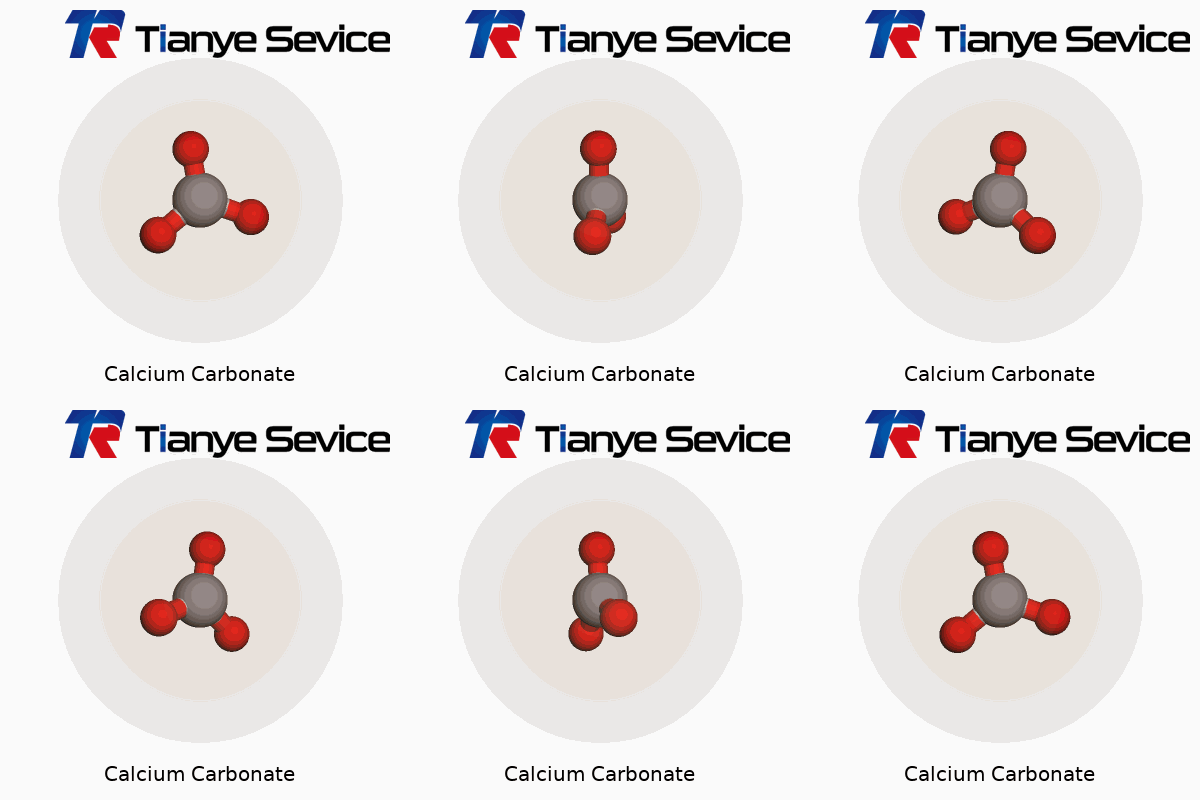
| Names | |
| Preferred IUPAC name | Calcium carbonate |
| Other names |
Calcite
Aragonite Limestone Marble Chalk Whiting |
| Pronunciation | /ˌkæl.si.əm ˈkɑː.bə.neɪt/ |
| Identifiers | |
| CAS Number | 471-34-1 |
| Beilstein Reference | 3907932 |
| ChEBI | CHEBI:3311 |
| ChEMBL | CHEMBL1207 |
| ChemSpider | 5290 |
| DrugBank | DB06724 |
| ECHA InfoCard | 03b7baee-3e41-4475-9143-f4d3f8a7aaa3 |
| EC Number | 207-439-9 |
| Gmelin Reference | 126 |
| KEGG | C00176 |
| MeSH | D002121 |
| PubChem CID | 10112 |
| RTECS number | FF9335000 |
| UNII | 1VBV8063TU |
| UN number | UN2072 |
| Properties | |
| Chemical formula | CaCO3 |
| Molar mass | 100.09 g/mol |
| Appearance | white powder or colorless crystals |
| Odor | Odorless |
| Density | 2.71 g/cm³ |
| Solubility in water | Practically insoluble |
| log P | -1.37 |
| Vapor pressure | Negligible |
| Acidity (pKa) | 9.0 |
| Basicity (pKb) | 8.3 |
| Magnetic susceptibility (χ) | −48.6·10⁻⁶ |
| Refractive index (nD) | 1.658 |
| Dipole moment | 0 Debye |
| Thermochemistry | |
| Std molar entropy (S⦵298) | 92.9 J·mol⁻¹·K⁻¹ |
| Std enthalpy of formation (ΔfH⦵298) | -1206.9 kJ/mol |
| Std enthalpy of combustion (ΔcH⦵298) | -1207 kJ/mol |
| Pharmacology | |
| ATC code | A12AA04 |
| Hazards | |
| Main hazards | May cause respiratory irritation. |
| GHS labelling | Not classified as hazardous according to GHS |
| Pictograms | GHS07,GHS08 |
| Signal word | Warning |
| Hazard statements | No hazard statements. |
| Precautionary statements | Keep container tightly closed. Store in a dry place. Avoid breathing dust. Wash hands thoroughly after handling. Use only outdoors or in a well-ventilated area. Wear protective gloves/eye protection. |
| Lethal dose or concentration | LD50 oral rat 6450 mg/kg |
| LD50 (median dose) | 6450 mg/kg (rat, oral) |
| NIOSH | CC0700000 |
| PEL (Permissible) | PEL 15 mg/m3 |
| REL (Recommended) | 1,300 mg Ca/day |
| Related compounds | |
| Related compounds |
Calcium oxide
Calcium hydroxide Magnesium carbonate Calcium bicarbonate Calcium sulfate |